Natural Remedies - Healing with Medicinal Herbs
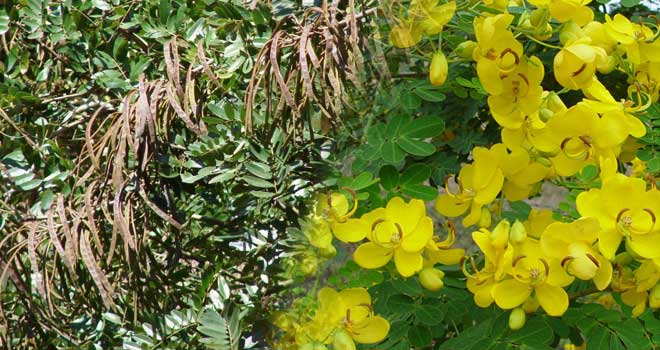
Senna (Cassia angustifolia (sin. Senna alexandrina) Caesalpiniaceae)
Other Names: Cassia
Senna, a shrub growing up to one meter, originates from arid regions and is cultivated in India and Pakistan. Known since the 10th century for its laxative properties discovered by Arab physicians, it produces yellow flowers and flat pods containing 6–8 seeds.
Parts for Use
Leaves and Pods
- Leaves are harvested before flowering.
- Pods are collected in autumn.
- Both are sun-dried and used in decoctions, laxatives, and tablets.
Ingredients
Senna contains anthraquinones (sennosides) as its primary laxative compounds, along with flavonoids and mucilage.
Use in Treatment
Senna is a potent laxative, stimulating intestinal contractions within 10–12 hours, and is a key ingredient in many commercial constipation remedies. A 1993 UK study found senna more effective than lactulose for chronic constipation in the elderly. For best results, combine with a high-fiber diet (fruits, vegetables, seeds, brown rice), adequate hydration, and exercise to address underlying causes of constipation.
Cultivation
Grow senna from seeds in well-drained soil in a warm, sunny location, as it is frost-sensitive.
Preparation and Dosage
For Internal Use (Intestinal Constipation)
- Decoction: Soak 3–6 pods in 150 ml water for 6–12 hours, drink once daily.
- Liquid Extract (1:1 in 25% alcohol): Take 0.5–1 ml daily.
- Tablets (7.5 mg sennosides): Take 1–2 tablets at bedtime, not exceeding 2 tablets in 24 hours.
Warnings
- Consult a healthcare professional before use.
- Avoid during pregnancy and breastfeeding.
- Do not give to children under 12.
- Avoid if taking other anthraquinone-containing medications.
- Do not use with intestinal blockages, inflammation, or hemorrhoids.
- Limit use to 8–10 days to prevent severe indigestion.
- Prolonged use may worsen constipation.
- Consult a doctor if taking heart medications.