Natural Remedies - Healing with Medicinal Herbs
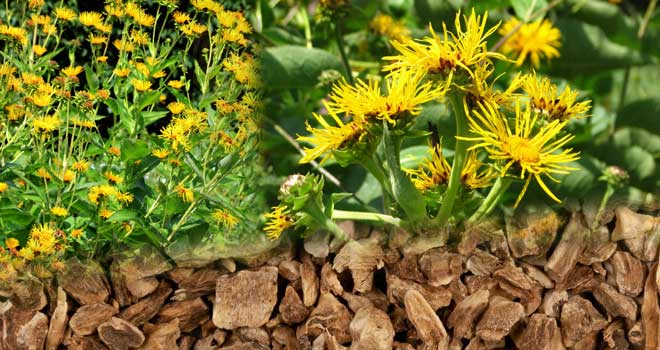
Elecampane (Inula helenium Asteraceae)
Other Names: Horse-Heal, Elfdock
Elecampane has been recognized as a medicinal plant for thousands of years. This hardy perennial can grow up to three meters tall. Its robust, branched stem bears long, oval leaves. From June to August, large golden-yellow flowers bloom, often seen in moist meadows and along forest edges. The coarse, thick root has numerous buds and a dense, widespread network of strong root shoots.
Parts for Use
Root
- Roots are harvested in September and October, then cut and dried at a temperature of at least forty degrees Celsius.
- Decoctions, tinctures, and extracts are prepared from dried roots, from which a balm is obtained for treating skin infections.
Ingredients
Elecampane root primarily contains 44% inulin, along with mucus and a small amount of essential oil. The oil includes alantolactone, which may irritate mucous membranes, and helenin.
Use in Treatment
Elecampane preparations are used to treat various respiratory issues. The mucus acts as an expectorant, soothing coughs caused by infections and inflammation. Elecampane extract is known to inhibit the growth of bacteria that cause tuberculosis, with alantolactone being primarily responsible for this antibacterial activity. When combined with other herbal extracts, elecampane is effective in treating bronchitis and asthma. Helenin exhibits antifungal properties, particularly against fungi like Microsporum and Trichophyton, making elecampane root useful for treating fungal skin infections. Additionally, elecampane acts as a diuretic, aiding in toxin removal, and stimulates bile secretion in the gallbladder, which helps alleviate indigestion.
Cultivation
Elecampane can be easily grown from root cuttings. Plant the cuttings in moist, loamy soil rich in organic matter, ideally near deciduous trees. Place elecampane in a sunny location for optimal growth.
Preparation and Dosage
For Internal Use (Coughs and Respiratory Inflammation)
- Decoction: Place 10 to 15 grams of dried roots in one liter of boiling water, boil for ten minutes, strain, and take one tablespoon every two hours.
For External Use (Fungal Skin Infections)
- Ointment (50% elecampane): Apply the ointment several times daily.
Warnings
- Consult a healthcare professional before use.
- Do not use elecampane preparations during pregnancy or breastfeeding.
- Large doses of elecampane may cause vomiting, diarrhea, and intestinal pain.
- Elecampane may cause allergic reactions when used as an ointment for skin infections.