Natural Remedies - Healing with Medicinal Herbs
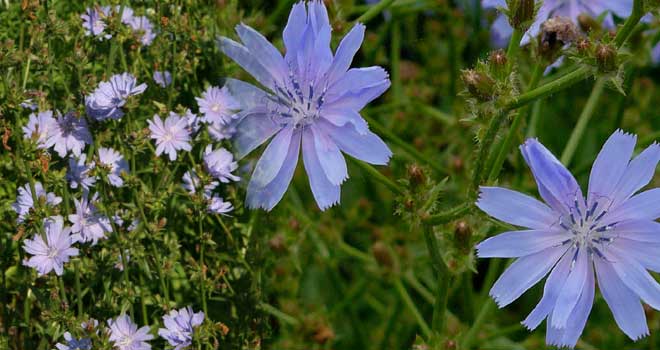
Chicory (Cichorium intybus Compositae/Asteraceae)
Other Names: Common Chicory, Blue Daisy, Blue Dandelion, Blue Weed, Coffeeweed, Cornflower, Hendibeh, Horseweed, Succory, Wild Endive
Valued by the ancient Romans as a vegetable, chicory is now commonly found on uncultivated land and along roadsides across Europe. This hardy perennial grows up to one meter tall, with deeply serrated leaves surrounding an upright, hairy stem. From June to September, it produces flower heads, typically light blue, though pink or white variations exist.
Parts for Use
Leaves, Flowers, Roots
- Leaves are collected during blooming and used to prepare infusions.
- Flowers and roots can be harvested year-round for fresh use or in September for drying.
- Roots are cut into small pieces before sun-drying.
- Roasted and milled chicory roots serve as a coffee substitute.
Ingredients
The entire plant contains a milky sap rich in inulin. Flowers contain phenolic acid, and roots have bitter sesquiterpene lactones.
Use in Treatment
Chicory has been recognized for centuries for its anti-inflammatory and antiseptic properties, making it effective in balms for swelling relief. Phenolic acid acts as a diuretic, addressing fluid retention-related swelling, and may reduce inflammation from rheumatism or gout. Inulin promotes beneficial intestinal bacteria, supporting healthy digestion and potentially preventing or treating slow digestion, gastrointestinal ulcers, and flatulence. Inulin may also help lower blood cholesterol levels. Sesquiterpene lactones stimulate gastric and gallbladder secretions, enhancing liver function. A 1998 study by Indian scientists confirmed the liver-protective properties of chicory roots.
Cultivation
Chicory thrives in most soil types, particularly rich, well-drained soil, and prefers sunny locations.
Preparation and Dosage
For Internal Use (Liver and Kidney Problems, Flatulence, Vomiting, Slow Digestion)
- Decoction: Add 15–30 grams of a mixture of roots, leaves, and flowers to one liter of boiling water, cook for 5 minutes, strain, and drink one cup before lunch and dinner.
- Quick Drink: Mix one teaspoon of chicory powder in a glass of boiling water, add milk, and sweeten to taste.
Warnings
- Consult a healthcare professional before use.
- Individuals with intestinal constipation or inflammation should consult a doctor before using chicory.
- No significant harmful side effects have been reported with chicory use.