Natural Remedies - Healing with Medicinal Herbs
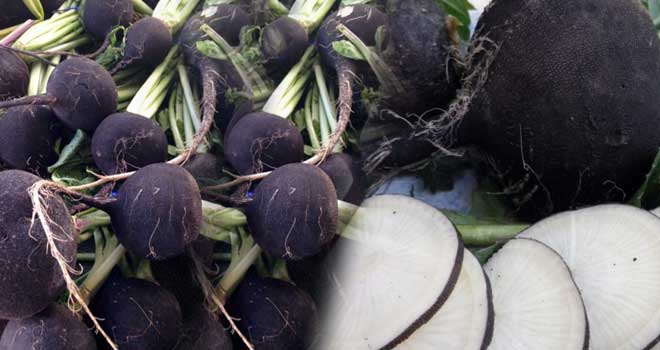
Black radish (Raphanus sativus niger Cruciferae)
Other Names: Garden Radish, Black Spanish Radish, Radish
Black radish, a biennial plant that can grow up to one meter tall, has a thickened root with a black rind and white flesh. Its rough, incised leaves are coarse to the touch. Pale purple flowers, arranged in inflorescences, produce short seed pods. Cultivated since ancient Egyptian and Roman times, black radish has been valued for its medicinal properties.
Parts for Use
Root
- The root is harvested in autumn when it contains the highest concentration of active compounds.
- It is used to prepare liquid or dry extracts.
Ingredients
Black radish contains essential oils rich in sulfur-containing glucosinolates, as well as raphanine, which has antiseptic properties. Other components include vitamin C, B vitamins, minerals (calcium and arsenic), and sugars.
Use in Treatment
Black radish is used to treat intestinal disorders by stimulating bile secretion, which aids digestion and alleviates constipation. Its raphanine content provides antibacterial and antiviral properties, as demonstrated in experiments. Externally, black radish is applied to treat minor burns and skin irritations, such as diaper rash. A 2002 U.S. study suggests that glucosinolates in black radish and related vegetables may reduce cancer risk.
Cultivation
Black radish grows best in moist, well-drained soil in a sunny location. Sow seeds in spring for optimal growth.
Preparation and Dosage
For Internal Use (Bile Secretion and Constipation)
- Juice or Fresh Root: Dilute one tablespoon of juice in a glass of water and drink three times daily.
- Capsules (100 mg dry extract): Take two capsules in the morning before meals.
Warnings
- Consult a healthcare professional before use.
- Do not use black radish preparations continuously for more than one month.
- Avoid black radish if you have gastritis, stomach ulcers, gallstones, or other bile-related issues, as it may cause side effects such as stomach irritation, heartburn, or diarrhea.
- Black radish is not recommended for individuals with thyroid problems, as its sulfur compounds may cause thyroid gland inflammation.