Natural Remedies - Healing with Medicinal Herbs
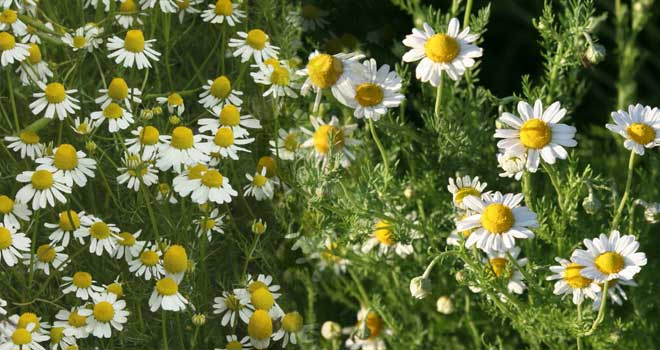
Chamomile (Matricaria recutita (sin. Chamomilla recutita) and Chamaemelum nobile (sin. Anthemis nobile) Compositae/Asteraceae)
Other Names: German Chamomile, Wild Chamomile, Blue Chamomile, Roman Chamomile, Garden Chamomile
German chamomile is commonly found across Europe in fields and along roadsides, though it is increasingly cultivated in gardens. It grows to about 40 centimeters tall and blooms with fragrant, daisy-like flowers. Roman chamomile, a low-growing perennial, thrives in arid regions of western and southern Europe. It has branched stems covered with small, serrated leaves and produces solitary flower heads with yellow centers and white petals during summer. Both types have a strong, pleasant aroma.
Parts for Use
Flowers
- Chamomile flowers, whether wild or cultivated, are harvested in full bloom and dried.
- Dried flowers have a strong aroma and bitter taste.
- Fresh flowers can be used, but properly dried flowers retain active ingredients for up to a year when stored in a dark, dry place.
- Flowers are used in preparations, capsules, extracts, eye lotions, throat sprays, mouthwashes, and lozenges.
Ingredients
German chamomile’s bitter taste comes from sesquiterpene lactones. Its essential oil contains azulenes, bisabolol, and flavonoids, providing anti-inflammatory and antispasmodic properties that soothe muscle tissues, particularly in the digestive tract. Roman chamomile contains coumarins and flavonoids with antispasmodic and anti-inflammatory effects, along with trace amounts of essential oil.
Use in Treatment
Chamomile has been used for centuries to treat indigestion and as a mild sedative to calm the nervous system. Its sesquiterpene lactones stimulate digestive juice secretion, while flavonoids and coumarins provide antispasmodic and anti-inflammatory effects. The essential oil soothes mucous membranes, making chamomile vapor inhalation effective for sinusitis and asthma. Externally, chamomile cream treats skin inflammation, eczema, diaper rash, and cracked nipples. A 1979 German study confirmed bisabolol’s anti-inflammatory effects, and a 1983 French study demonstrated chamomile’s antiviral properties against polio and herpes. Chamomile is also used for stomach aches, menstrual cramps, bloating, irritated eyes, sore throat, and rhinitis.
Cultivation
Chamomile can be grown from seeds, root cuttings, or young seedlings. Plant in spring in well-drained, neutral to acidic soil in a sunny location.
Preparation and Dosage
For Internal Use (Digestive Cramps, Bloating, Slow Digestion, Menstrual Pain, Insomnia)
- Infusion: Place 5–8 grams of chamomile flowers in a cup of boiling water, steep for 10 minutes, and drink three cups daily.
For External Use (Irritated Eyes, Sore Throat, Rhinitis, Sinusitis)
- Eye Lotion: Use only sterilized, commercially available preparations as per instructions.
- Throat Spray: Prepare an infusion, cool it, and spray the back of the throat 2–3 times daily.
- Inhalation: Prepare hot chamomile vapor and inhale 2–3 times daily for rhinitis and sinusitis.
Warnings
- No significant harmful effects have been reported.
- External use may rarely cause allergic reactions.
- Avoid chamomile if allergic to Asteraceae plants (e.g., ragweed, chrysanthemums, arnica, calendula) or if you have asthma.
- Consult a doctor before use if taking anticoagulants.
- Do not use Roman chamomile during pregnancy or breastfeeding.