Natural Remedies - Healing with Medicinal Herbs
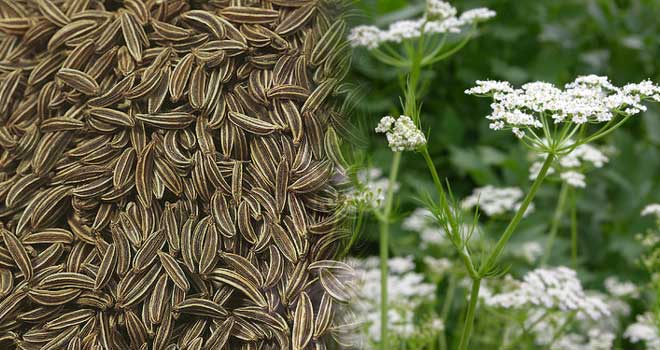
Caraway (Carum carvi Apiaceae)
Other Names: Polish Cumin, Meridian Fennel, Persian Cumin
Caraway, with its feathery leaves and umbrella-shaped clusters of tiny white flowers, is a beautiful and popular spice plant. Growing up to one meter tall, its flowers produce dark brown seeds with a distinctive aroma. Caraway is used to flavor liqueurs and other strong alcoholic beverages that aid digestion.
Parts for Use
Seeds
- Caraway seeds are harvested in July and August, just before ripening.
- They are often mistaken for cumin seeds due to their similar appearance.
- In European herbal medicine, caraway is used in infusions and essential oils.
Ingredients
Caraway seeds contain 50–85% volatile essential oil, primarily carvone, an antiseptic that gives the seeds their characteristic scent. Limonene constitutes up to 20% of the oil, with the remainder including flavonoids.
Use in Treatment
Caraway has been used for thousands of years to support digestion, stimulating digestive juice secretion and cleansing the intestines. In Europe, it is often combined with fennel and anise in poultices to relieve stomach cramps, bloating, and gas. A 1985 study demonstrated that caraway oil relaxes intestinal muscles, alleviating painful bowel cramps. Caraway similarly relaxes uterine muscles, easing menstrual pain. The antibacterial properties of carvone help combat intestinal infections. In traditional Arabic medicine, caraway is used to address bedwetting in children. As an expectorant, it can soothe chest coughs, and its oil has been used to treat itching.
Cultivation
Sow caraway seeds or plant seedlings in well-drained soil in a sunny location.
Preparation and Dosage
For Internal Use (Indigestion, Bloating, Stomach Cramps, Gas, Menstrual Pain)
- Infusion: Place one teaspoon of a mixture of equal parts caraway, fennel, and anise in 250 mL of boiling water, steep for 2–3 minutes, divide into two or three portions, and drink throughout the day before meals. Alternatively, steep 1–5 grams of ground caraway seeds in a cup of boiling water for 10–15 minutes and drink two to three times daily before meals.
- Tincture (1:4 in 45% alcohol): Add 10–15 drops to cold water and drink three times daily after meals.
Warnings
- No harmful side effects have been observed, so caraway seeds can generally be used without medical supervision.
- Caraway essential oils should only be used under the guidance of a herbalist.
- Like other Apiaceae family plants (e.g., coriander, cumin, dill), caraway may cause allergic reactions such as runny nose, watery eyes, or diarrhea.