Natural Remedies - Healing with Medicinal Herbs
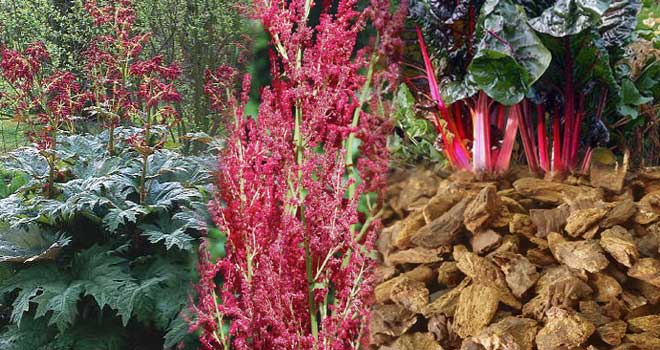
Rhubarb (Rheum palmatum Poligonaceae)
Other Names: Chinese Rhubarb, Ornamental Rhubarb, Turkey Rhubarb, East Indian Rhubarb
Originating from northeastern Asia, this rhubarb species, unlike garden rhubarb, is used as an herbal remedy. This tall herbaceous plant has thick, fleshy stems and broad, patchy, palmate leaves. In July and August, it produces relaxed inflorescences of small, star-shaped white, greenish, or reddish flowers, followed by dry, winged fruits. Only the thickened underground stem (rhizome) is used for medicinal purposes.
Parts for Use
Thickened Underground Stem (Rhizome)
- Although grown in Europe for herbal medicines, the underground stem primarily comes from China and Korea.
- Underground stems of plants aged 6 to 10 years are harvested in autumn.
- Dried underground stems are used to prepare infusions, decoctions, tinctures, powders, or sold in pieces.
Ingredients
The laxative properties of Chinese rhubarb stem from anthracene derivatives in the dry underground stem, present as anthraquinone glycosides. It also contains flavonoids and tannins, which may cause constipation in small doses.
Use in Treatment
Rhubarb is an effective laxative, though small doses may cause constipation due to its tannins. Studies show it stimulates intestinal muscle activity and increases water and electrolyte absorption. Rhubarb preparations should not be taken for more than 10 consecutive days to avoid risks such as colon catarrh, diarrhea, electrolyte imbalance, and decreased blood potassium. Recent Chinese research indicates rhubarb can reduce excessive urine and nitrogenous waste in the blood, aiding kidney function and potentially preventing inflammation in chronic kidney failure. It may also prevent blood vessel constriction. Additionally, rhubarb is used to stimulate appetite, improve digestion, treat liver and gallbladder issues, and soothe oral inflammations and infections.
Cultivation
Chinese rhubarb can be grown from seeds sown in late winter or root cuttings in late fall. It prefers moist, well-drained, humus-rich soil and full sun.
Preparation and Dosage
For Internal Use (Constipation)
- Decoction: Boil 20 grams of dried or 40 grams of fresh underground stems in 750 ml of water until reduced to about 500 ml. Take 50 to 100 ml in the early evening.
For Internal Use (Loss of Appetite)
- Decoction: Boil 20 grams of dried or 40 grams of fresh underground stems in 750 ml of water until reduced to about 500 ml. Take 10 ml twice daily.
Warnings
- Consult a healthcare professional before use.
- Do not use rhubarb preparations during pregnancy or breastfeeding.
- Avoid rhubarb if you have bowel problems, arthritis, kidney disease, or urinary tract issues.
- Do not combine rhubarb with other laxatives.
- Rhubarb is not recommended as a laxative for children aged 10 to 15 and should never be given to children under 10.
- Individuals with allergies should use rhubarb cautiously.
- Combine rhubarb use with increased exercise and dietary changes.