Natural Remedies - Healing with Medicinal Herbs
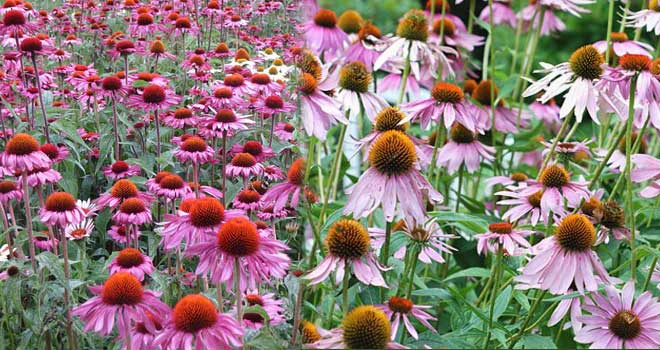
Echinacea (Echinacea angustifolia, E. purpurea, E. pallida Asteraceae/Compositae)
Other Names: Narrow-Leaved Purple Coneflower, Blacksamson Echinacea, Pale Purple Coneflower, Coneflower
Echinacea, native to the plains of North America, has been traditionally used by Native Americans to treat wounds and snake bites. Today, three species of echinacea are cultivated for medicinal purposes. Additionally, echinacea is a visually appealing plant with a long flowering period, making it a popular choice for gardens.
Parts for Use
Roots and Flowers
- Roots are used more frequently than flowers.
- Roots are harvested from plants at least four years old, and flowers are picked when fully open.
- The root is cylindrical, slightly fragrant, initially sweet in taste, and later bitter.
- Echinacea is used to prepare tinctures, extracts, and powders, either alone or combined with other herbs.
Ingredients
The root contains volatile oil, polysaccharides, resins with antiseptic and antifungal properties that stimulate the immune system, and antibacterial and antiviral glucosides.
Use in Treatment
Echinacea is an effective remedy for flu, colds, upper respiratory tract infections, urinary tract infections, and other conditions. It is commonly used to treat colds, promoting rapid recovery and aiding the immune system in fighting infections. In 1988, German scientists found that echinacea enhances phagocytosis, the process by which immune cells eliminate foreign bodies. In 2002, Canadian researchers confirmed its antiviral efficacy against herpes. Echinacea boosts the body’s resistance to infections, particularly the flu, making it valuable for individuals with weakened immunity, such as those undergoing chemotherapy. Such use should only occur under medical supervision.
Cultivation
Echinacea thrives in sunny locations with rich, well-drained soil.
Preparation and Dosage
For Internal Use (Colds, Sore Throats, Flu, and Bronchitis)
- Capsules (325 mg): Take one to three capsules daily with water before meals.
- Tincture (1:5 in 45% alcohol): Dilute fifteen drops in water and take three times daily.
Warnings
- Consult a healthcare professional before use.
- Do not use echinacea as a substitute for prescribed treatments.
- Prolonged use may reduce its effectiveness.
- Allergies to Compositae family flowers may indicate a potential allergy to echinacea.
- Individuals with immune disorders (e.g., lupus), progressive diseases (e.g., multiple sclerosis), or tuberculosis should consult a doctor before using echinacea preparations.