Natural Remedies - Healing with Medicinal Herbs
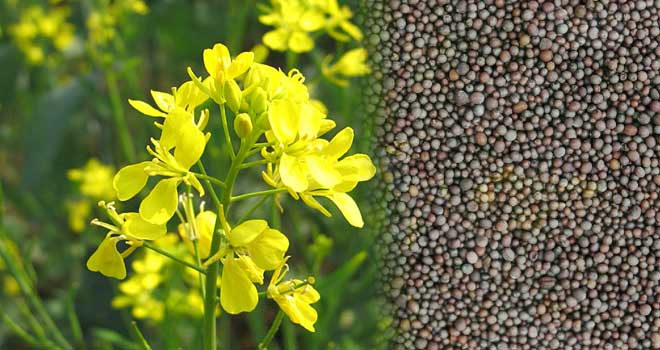
Black mustard (Brassica nigra Brassicaceae)
Other Names: Wild Mustard
Black mustard, an annual plant native to Europe and Asia, has been cultivated as a spice and for medicinal purposes for over two thousand years. Its lower leaves are serrated, while the upper leaves are smaller with smooth edges. The plant produces yellow flowers in inflorescences, which develop into long clusters containing tiny, globular, blackish seeds.
Parts for Use
Flowers and Seeds
- Flowers are harvested in early summer before fully blooming, then dried, chopped, and used for infusions.
- Seeds are collected in late summer, dried, and crushed into a powder for use in balms.
Ingredients
The seeds are rich in lipids, including unsaturated fatty acids such as oleic and linoleic acid. They also contain glucosinolates, particularly sinigrin, and various types of mucilage.
Use in Treatment
Black mustard seeds produce a warming effect by increasing circulation through blood vessel dilation, which can relieve pain caused by inflammation. This makes them suitable for external use in ointments for treating bronchitis, rheumatic pain, joint pain, and flu. For internal use, black mustard is used in small doses to stimulate appetite and aid digestion. Research is ongoing into the glucosinolates in mustard, particularly sinigrin, for their potential to slow cancer development, though their efficacy compared to related compounds in other Brassicaceae plants, like broccoli, is not yet fully established.
Cultivation
Plant black mustard in a sunny location with well-drained, nutrient-rich soil.
Preparation and Dosage
For Internal Use (Low Appetite and Indigestion)
- Infusion: Place one teaspoon of dried flowers in a cup of boiling water, let sit for 5 minutes, strain, and drink three cups daily.
For External Use (Bronchitis, Rheumatic Pain, Joint Pain, and Flu)
- Paste: Mix 50 grams of fresh mustard seed powder with 200 grams of flax powder, add enough lukewarm water to form a thick paste, wrap in cloth, apply to the affected area, and leave for 10 minutes.
Warnings
- Consult a healthcare professional before use.
- Do not apply mustard preparations to damaged or cracked skin or near the eyes.
- Avoid using mustard if you have circulation problems, respiratory conditions, or varicose veins.
- Use mustard pastes cautiously; overuse or prolonged application may cause severe pain, blisters, or irreversible skin tissue damage.
- Mustard preparations are not recommended for children.