Natural Remedies - Healing with Medicinal Herbs
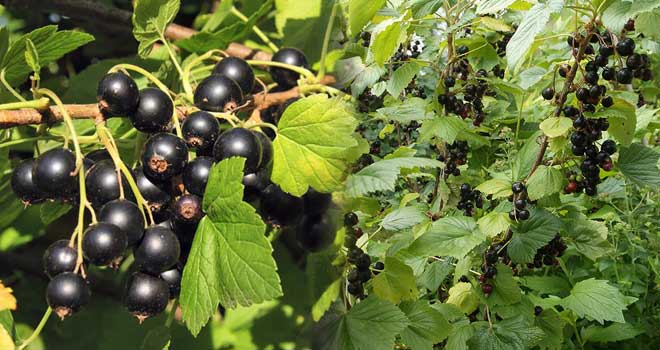
Blackcurrant (Ribes nigrum Grossulariaceae)
Other Names: Black Currant, Cassis
Blackcurrant, a deciduous shrub reaching up to 130 cm in height, is cultivated across Europe, except in its northernmost regions, for its sweet black berries. Its aromatic, coarsely serrated leaves have oil-containing glands on their undersides. In spring, tiny green flowers form loose, hanging clusters, which develop into edible, sweet-scented berries.
Parts for Use
Fruits and Leaves
- Leaves are harvested in April and May before flowering.
- Berries are harvested in summer when ripe and dried carefully to prevent spoilage.
- Blackcurrant is used in infusions, extracts, or powders.
- Berries and leaves are also used to flavor pharmaceutical preparations.
Ingredients
Blackcurrant berries are rich in sugars, organic acids, polyphenols (especially flavonoids and anthocyanins), which benefit vascular health. The leaves contain a small amount of essential oil and flavonoids. Anthocyanins and flavonoids contribute to blackcurrant’s anti-inflammatory and vasoprotective properties.
Use in Treatment
Blackcurrant has been used for centuries to treat rheumatism, with its anti-inflammatory effects supported by research. A 1994 U.S. study found that blackcurrant seed oil is effective for rheumatoid arthritis, and a 2013 Scottish study confirmed its benefits for inflammatory conditions. For rheumatic pain, the oil can be combined with willow or harpagophyte. Blackcurrant is also used as a mouthwash for bleeding gums or to gargle for mouth and throat inflammation. Its anthocyanins and flavonoids enhance capillary elasticity and strength, making it valuable for treating venous and arterial conditions, such as varicose veins, and improving circulation by preventing vein weakening. Blackcurrant is effective for urinary tract infections, with 1976 studies showing that berry anthocyanins inhibit bacterial growth and 2000 Japanese research demonstrating antiviral effects against the flu virus. The berries’ high vitamin C content also supports immune health.
Cultivation
Blackcurrant thrives in well-drained, clay-rich soil in sunny or lightly shaded areas.
Preparation and Dosage
For Internal Use (Venous and Arterial Conditions, Urinary Tract Infections, and Rheumatic Pain)
- Infusion: Place 5 grams of dried leaves in 1 liter of boiling water, let sit for 5 minutes, strain, and drink 2–3 cups daily.
- Capsules (340 mg leaf powder with harpagophyte and willow): Take two capsules three times daily.
- Leaf Extract (with boldo and silver birch): Add 15–30 drops to a glass of water and take 2–3 times daily.
Warnings
- Do not use blackcurrant with harpagophyte if you have a stomach or duodenal ulcer.
- No adverse effects have been observed at therapeutic doses.