Natural Remedies - Healing with Medicinal Herbs
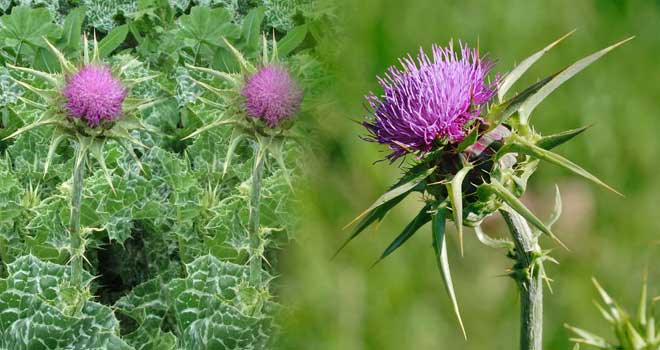
Milk thistle (Silybum marianum (Carduus marianus) Asteraceae/Compositae)
Other Names: Blessed Milkthistle, Marian Thistle, Saint Mary's Thorn, Mediterranean Milk Thistle
Milk Thistle, a hardy herbaceous plant found across Europe and Asia, has glossy leaves with white veins and sharp thorns. Legend attributes the white veins to a drop of milk from the Virgin Mary, earning it the name Saint Mary's Thorn. Purple flower heads bloom in summer, producing seeds with tufts.
Parts for Use
Leaves and Seeds
- Leaves are harvested in late summer, dried, cut, or powdered for infusions.
- Seeds are collected in autumn, dried, and used for powders, dry extracts, and tinctures.
- Often combined with other herbs like artichoke for bile-related issues.
Ingredients
Milk Thistle seeds contain silymarin, a compound known for liver protection. Leaves have flavonoids, which support circulation, and β-sitosterol, which helps emulsify fats and break down cholesterol deposits.
Use in Treatment
Milk Thistle’s silymarin offers antioxidant properties, protecting the liver from free radical damage, making it a valuable adjunct for chronic hepatitis and liver cirrhosis. Spanish research highlights silymarin’s anti-inflammatory effects, useful for hemorrhoids. Infusions and tinctures stimulate bile secretion, aiding minor digestive problems, and can promote menstruation. The herb also soothes muscle cramps.
Cultivation
Milk Thistle is easily grown from seeds in well-drained soil in a sunny, uncultivated garden area.
Preparation and Dosage
For Internal Use (Digestive Problems, Bile Issues)
- Infusion: Steep 1 teaspoon of dried leaves in a cup of boiling water for 10 minutes, strain, and drink 3 cups daily before meals.
- Tincture: Add 30 drops to a glass of water, take 3 times daily before meals.
For Internal Use (Chronic Hepatitis, Liver Cirrhosis)
- Tablets (200 mg): Take 1–2 tablets daily.
Warnings
- Consult a healthcare professional before use.
- Avoid during pregnancy and breastfeeding.
- Do not use for bile problems like gallstones.
- May cause allergic reactions.
- Excessive use may lead to vomiting.